In summary
What you need to know
Plan tables, pace covers and keep hosts, managers and service teams aligned.
- Build the plan around real combinations
- Smooth arrival peaks with pacing
- Use post-service data to refine rules
- Best for
- Hospitality operators reviewing table management
- Reading time
- 4 min read
- Last reviewed
- 2 August 2026
Share this guide
Table management is the discipline of matching demand with physical capacity throughout a service. Done well, it improves the guest experience and revenue without asking the kitchen or floor team to absorb impossible peaks.
01
Model the room accurately
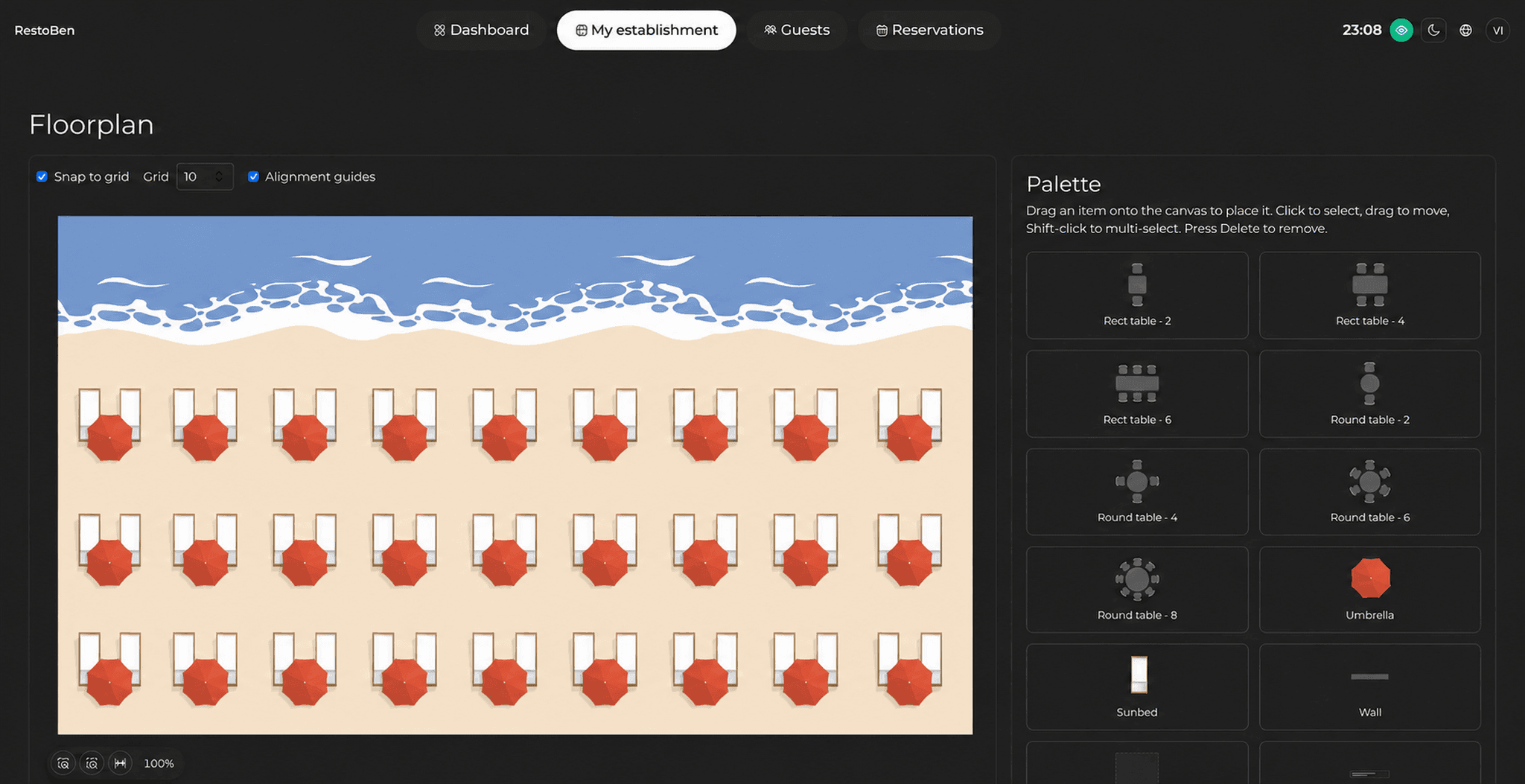
Create every sellable table, combination and area, including accessibility limits and outdoor dependencies. Record realistic minimum and maximum party sizes. A floor plan is only useful when it reflects how the restaurant truly seats guests.
02
Use pacing, not blanket blocking
Limit arrivals by interval or expected workload rather than closing entire periods. A 19:30 bottleneck may be solved by shifting a few bookings to 19:15 and 19:45. Review capacity with the kitchen and service leads, especially when menus or staffing change.
Service control loop
Turn one shift into a better floor plan decision
Review planned capacity against what actually happened, then change one rule before the next comparable service.
| Moment | Host records | Manager decides |
|---|---|---|
| Before service | Protected combinations and expected peaks | Which inventory stays held |
| During service | Arrival, seating and ready times | When an override is justified |
| After service | Rejected demand and unused seats | Which rule created the constraint |
| Next service | One revised priority or duration | Whether the change improved flow |
03
Manage in real time
Hosts need a shared view of expected, arrived, seated, late and finished parties. Update statuses consistently so the next decision uses current information. Define who may override rules and how exceptions are communicated.
04
Review the service
Compare planned and actual seating times, table turns, walk-ins and unused inventory. Look for recurring patterns by day and party size before changing rules.
05
Procurement and operating depth
A weekly table review should combine the floor plan with rejected demand. Look at party sizes and times that could not be placed, then trace which earlier assignments removed the required combinations. Adjust one rule, priority, holdback or duration, before the next comparable service. This creates an evidence loop and avoids redesigning the whole room around one unusual night.
Venue-specific application
A realistic operator example
A dining room has ten two-tops that can combine into five four-tops. Selling every two-top independently looks efficient early in the evening, but it can remove all viable space for a later group of four. The host team maps preferred combinations, protects two flexible pairs during the peak and releases them 45 minutes before service if larger demand has not appeared. The rule is reviewed against actual rejected searches, not intuition alone.
- Verify every table and legal capacity
- List valid and invalid combinations
- Set duration by party size and experience
- Agree arrival pacing with kitchen and floor leads
- Define override authority
- Review planned versus actual turns weekly
What to measure
Signals that belong in this review
Next operational step
Use the relevant UpSalt workflows
- Build the plan around real combinations
- Smooth arrival peaks with pacing
- Use post-service data to refine rules