In summary
What you need to know
Set, communicate and enforce minimum-spend rules for premium inventory and events.
- Apply minimums to scarce, valuable inventory
- Make redemption terms explicit
- Measure conversion alongside revenue
- Best for
- Hospitality operators reviewing revenue management
- Reading time
- 4 min read
- Last reviewed
- 2 August 2026
Share this guide
Minimum spend can protect the value of scarce inventory such as cabanas, premium terraces, large tables and event packages. Poorly explained minimums feel like hidden charges; well-designed ones make the commercial agreement clear.
01
Choose where it applies
Use minimum spend where demand and inventory value justify it, not as a blanket rule. Define conditions by date, time, area, party size or package. Compare the threshold with realistic guest spend.
02
Explain the value
Show what the amount covers, whether it is prepaid, how it is redeemed and what happens to unused value. Display the rule before the final booking step and repeat it in confirmation messages.
Threshold calculation
Test the spend rule before guests see it
A threshold should reflect constrained value and expected spend, not an arbitrary round number.
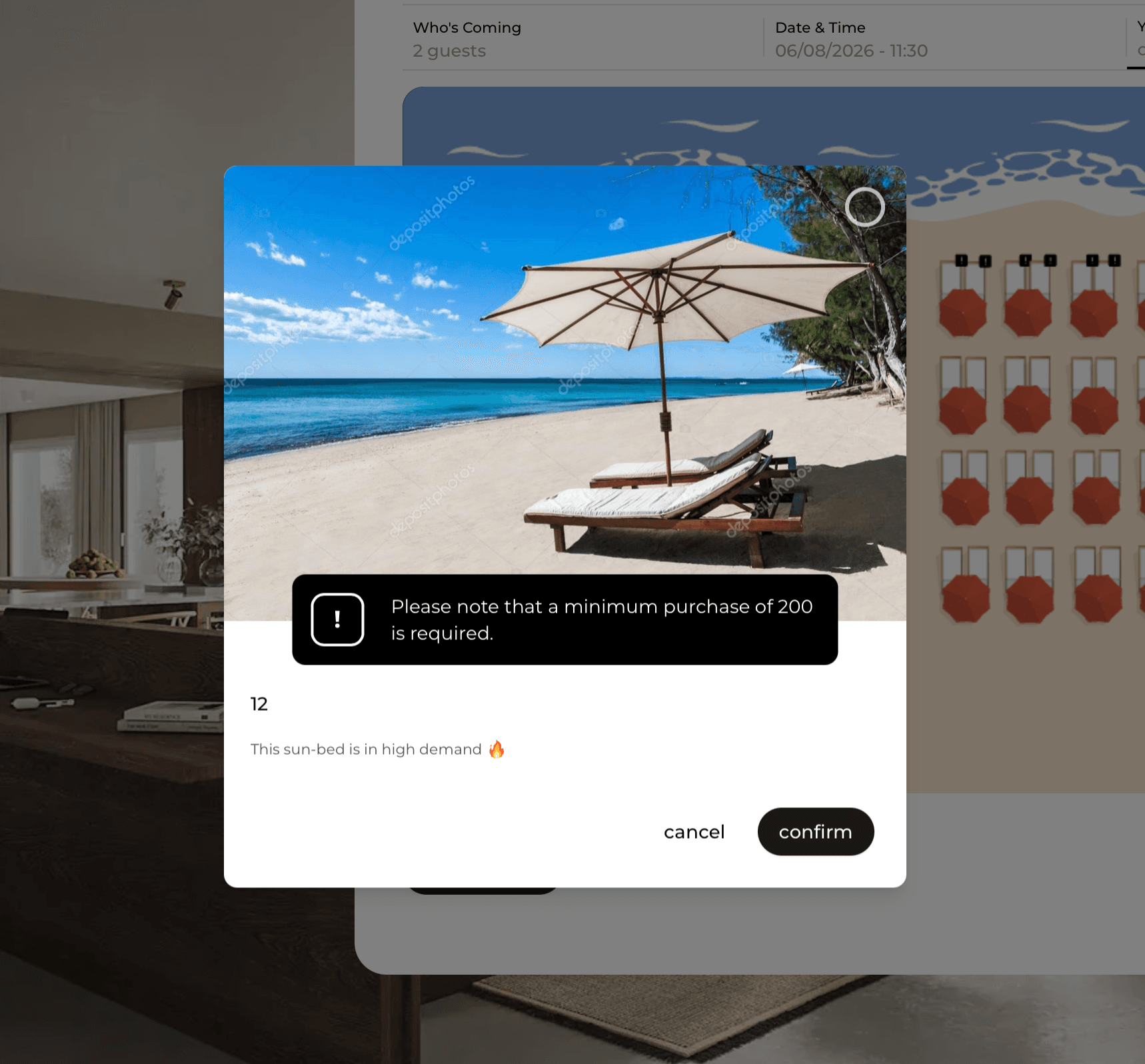
| Input | Example | Decision use |
|---|---|---|
| Expected bill | €320 | Baseline without the rule |
| Opportunity cost | €80 | Value of rejecting another booking |
| Proposed minimum | €350 | Amount shown before confirmation |
| Shortfall process | Offer eligible extras or charge difference | Train staff before launch |
03
Track fulfilment
Operations need a clear view of the commitment at arrival and checkout. Connect or reconcile prepayment carefully, record adjustments and give managers permission to handle exceptions.
04
Review guest response
Measure conversion, average spend, cancellations and disputes for bookings with minimums. Different thresholds may be appropriate for lunch, sunset, dinner and special events.
05
Procurement and operating depth
A threshold should reflect constrained value, not function as a surprise fee. Model the opportunity cost of the table or area, expected spend distribution and the conversion effect of the rule. Test several thresholds using historical bills before publishing one. If most suitable guests naturally exceed the amount, the rule may clarify commitment; if many miss it, staff need a fair and clearly communicated shortfall process.
Venue-specific application
A realistic operator example
A premium terrace table for four carries a €300 minimum spend on Saturday evening. The booking journey shows the total and per-person equivalent before confirmation, explains whether a deposit is credited and lists what counts toward the minimum. After service, the venue compares booking completion, average spend, guest questions and unused premium inventory with similar dates that had no rule.
- Link the threshold to a real inventory constraint
- Show total and per-person implications
- Define eligible spend and shortfall treatment
- Explain deposit interaction
- Give staff an exception workflow
- Review conversion and guest feedback
What to measure
Signals that belong in this review
Next operational step
Use the relevant UpSalt workflows
- Apply minimums to scarce, valuable inventory
- Make redemption terms explicit
- Measure conversion alongside revenue