In summary
What you need to know
Understand branded booking journeys, guest trust, data ownership and implementation choices.
- Brand the complete journey
- Verify data control separately
- Do not trade usability for customisation
- Best for
- Hospitality operators reviewing direct booking
- Reading time
- 4 min read
- Last reviewed
- 7 August 2026
Share this guide
A white-label booking experience presents the reservation journey as part of the venue’s own brand. It can strengthen trust and continuity, but branding alone does not guarantee ownership or good conversion.
01
Elements of white labelling
Look for venue logo, colours, language, tone, domain or embed options, email templates and policy presentation. The journey should remain recognisably connected to the restaurant from click to confirmation.
02
Data and infrastructure questions
Ask who controls guest records, which party processes payments, where data is hosted and how it can be exported. A branded screen can still hide dependence on a third-party marketplace.
Brand continuity audit
Check identity, trust and ownership at every step
Matching colours is not enough if the guest loses context or cannot understand who processes the booking.
| Stage | Continuity check | Trust check |
|---|---|---|
| Entry | Venue name and visual identity | Secure and expected destination |
| Availability | Consistent tone and language | Clear inventory and conditions |
| Payment | Venue and provider roles stated | Terms before confirmation |
| Confirmation | Branded receipt and actions | Help and support route |
03
Conversion and accessibility
Customisation must not reduce speed, readability or accessibility. Keep actions predictable and contrast sufficient. Test the flow on mobile and with keyboard navigation.
04
Measure the outcome
Compare direct-booking completion, abandonment, support contacts and repeat direct visits before and after launch. Branding is useful when it improves confidence and relationship continuity.
Venue-specific application
A realistic operator example
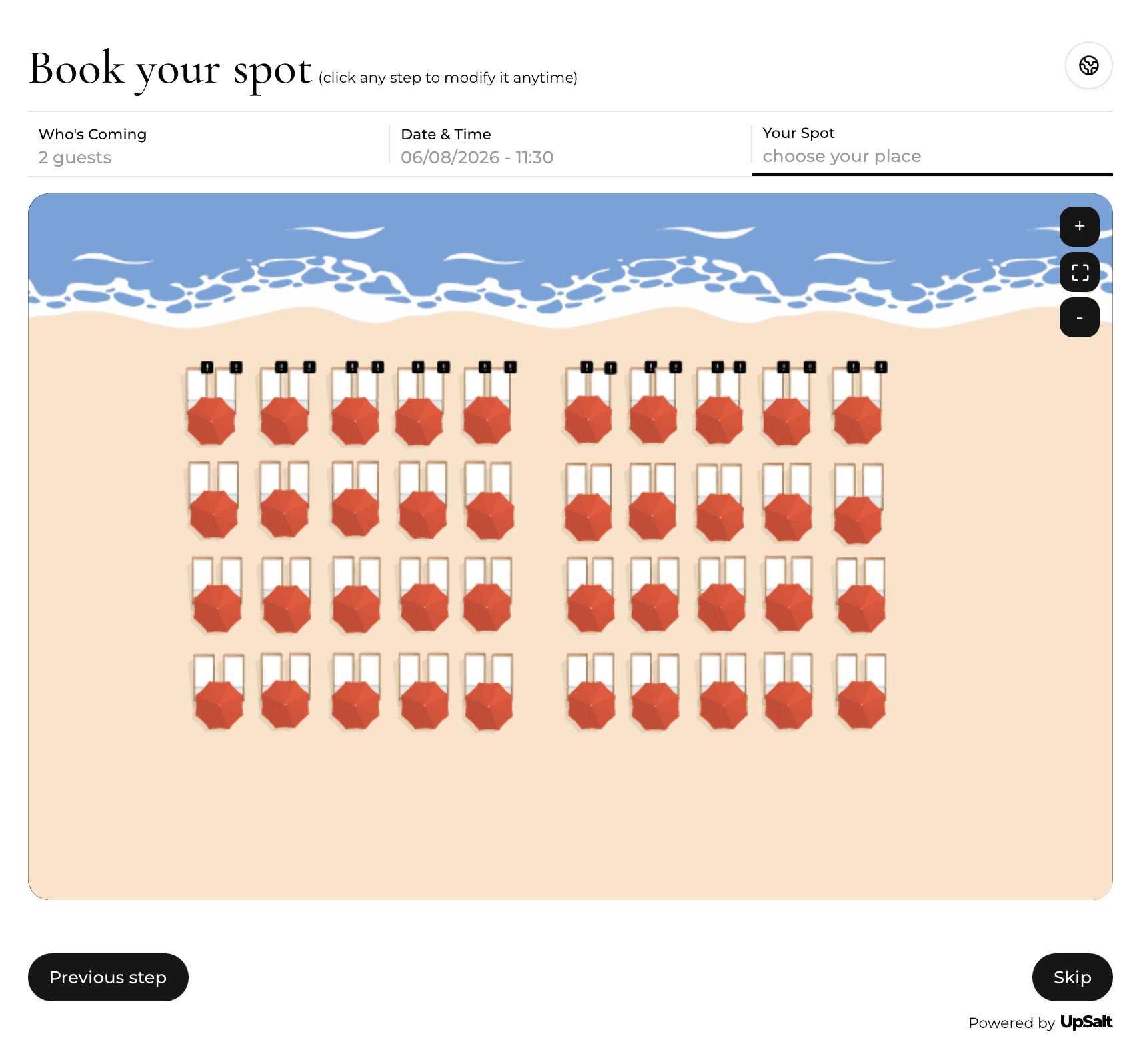
A venue replaces a generic third-party booking page with a journey using its own logo, colours, language and policy tone. Before launch, the team tests whether the experience still loads quickly and remains usable with keyboard navigation. It also verifies where guest records are stored and whether they can be exported. The result is judged on completed valid bookings and guest trust, not visual similarity alone.
- Apply brand elements without reducing readability
- Keep the venue identity visible through confirmation
- Test mobile, keyboard and error states
- Keep booking policies clear
- Verify export and domain or embed options
- Measure conversion and support contacts after launch
What to measure
Signals that belong in this review
Next operational step
Use the relevant UpSalt workflows
- Brand the complete journey
- Verify data control separately
- Do not trade usability for customisation